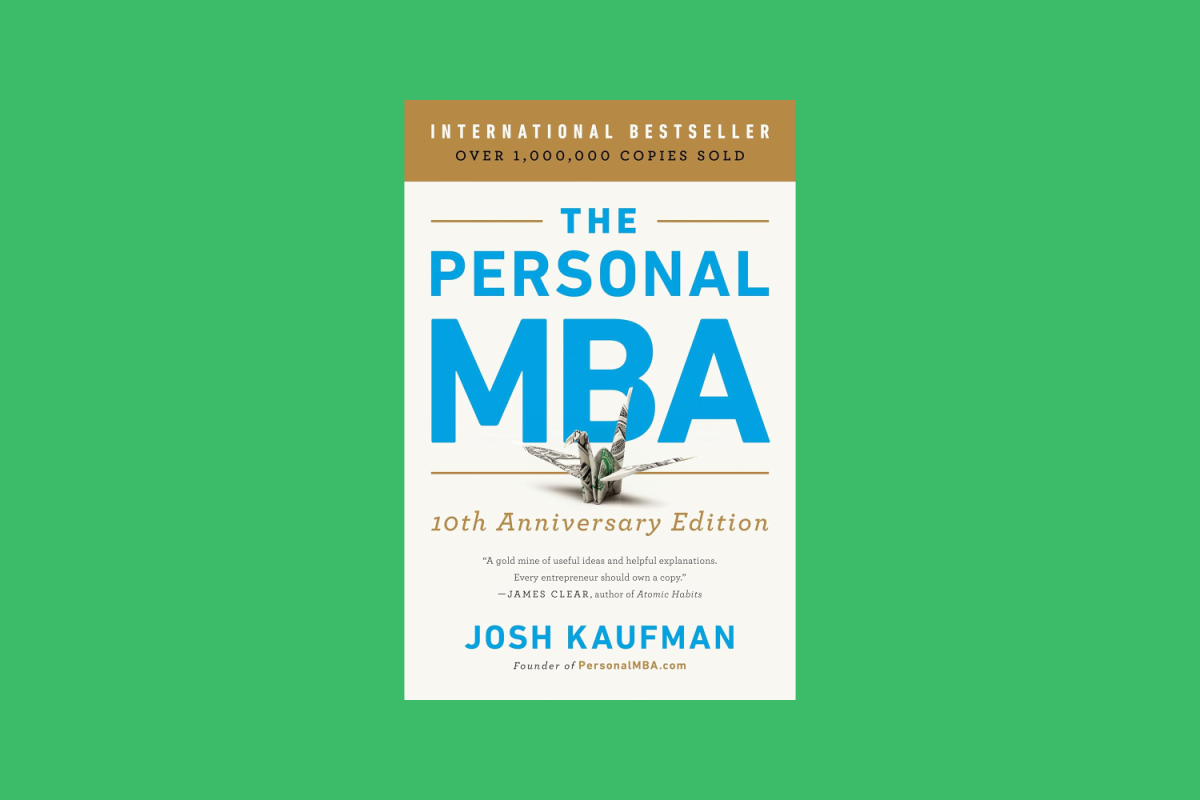
{The Personal MBA} : okay , but can you actually run the thing ?
Most business books lean on abstract vocabulary before letting you near a commercial decision . You finish reading feeling informed , yet on Monday morning you still don't know why invoices remain unpaid or why your best client is entertaining an offer from someone else .
Josh Kaufman’s The Personal MBA takes a pragmatic path . It bypasses academic theater & organizes commercial fundamentals into a coherent collection of mental models : how value gets created , marketed , sold , delivered , & financed .
The examples below are imagined situations in Kurdistan ; the numbers illustrate decisions , not market statistics .
READER : So studying this book replaces business school ?
AMEEN : Haha . Slow down .
If your goal is an executive seat inside a regional telecommunications operator or an international agency , compare the employer's explicit hiring requirements , the financial cost of tuition & housing , & the earnings you forgo while studying . Don't chase a credential out of habit , & don't discard it blindly either .
What a foundational book gives you is sharper questions . You still have to walk onto the shop floor , face your suppliers , & ask them .
A book cannot negotiate terms for you . If a hypothetical supplier hesitates to give you thirty days of trade credit , they aren't being difficult ; they need evidence you can pay . They want verified transaction records , consistent order volume , or secure collateral .
That part is on you .
01 〉 First , Show Me The Whole Business
Kaufman organizes every commercial enterprise into five interconnected functions : value creation , marketing , sales , value delivery , & finance . Something useful gets produced , prospective buyers discover it , terms get agreed upon , the commitment gets fulfilled , & enough cash remains to keep operating tomorrow .
The recurring trap is obsessing over one component while neglecting the other four . Creative founders routinely pour their energy into value creation . They will spend weeks refining an interior rendering or adjusting a brand mark . Meanwhile , their sales pipeline is empty , marketing is nonexistent , & their bank balance cannot support next month's rent .
READER : Isn't craftsmanship the best marketing ?
AMEEN : Craftsmanship that nobody discovers is an expensive hobby .
If you establish a design studio , producing elegant layouts is merely table stakes . If corporate clients never hear of you , marketing is inert . If interested managers visit your office but leave because your proposal drowns in technical jargon rather than launch clarity , sales has failed . If they hire you , yet your contractors deliver late , value delivery collapses . & if you delivered on time but underpriced the job so severely that you cannot cover studio expenses , finance is broken .
When an enterprise struggles , trace the five functions sequentially . Locate the specific link bearing unsustainable stress .
02 〉 Your Beautiful Idea Still Needs A Buyer
Kaufman frames human motivation around five core drives : acquire , bond , learn , defend , & feel .
Treat this as his practical framework for diagnosing customer motivation , not as universal science . When people spend resources , they seek to gain possessions , connect with others , satisfy curiosity , protect assets , or experience comfort & enjoyment . If an offering fails to connect with at least one drive , you are attempting to generate demand out of thin air .
Imagine an entrepreneur who opens a specialized matcha bar where morning foot traffic consists mainly of commuters who simply need a fast cup of hot black tea on their way to work . The founder loves ceremonial matcha . Their friends praise the aesthetic . The custom branding looks immaculate .
Now compare that to an imagined specialty cafe situated near a university campus or modern commercial offices in Erbil or Sulaymaniah . Here , students & professionals actively seek an inviting place to gather with friends , collaborate on projects , & experience a pleasant social ritual . The same beverage category serves entirely different human drives depending on the context .
Before committing capital to leases or equipment , evaluate Kaufman's ten diagnostic factors : urgency , market size , pricing potential , cost of customer acquisition , cost of value delivery , uniqueness , speed to market , upfront investment , upsell opportunities , & ongoing operational demands .
If buyers have no urgent reason to act today , your sales cycle stagnates . If launching requires heavy upfront outlay before testing a single transaction , your downside risk is severe .
Construct an early prototype . Host a temporary weekend tasting . Cater a small corporate gathering . Observe whether people readily pay when no social obligation exists . Compliments from friends are generous gestures ; they do not constitute commercial demand .
03 〉 Pricing Starts With Understanding The Alternatives
Many business owners determine prices by summing direct costs , adding a markup , & hoping the client accepts .
Cost-plus pricing can establish an essential cost floor so you do not operate at an unintended loss on labor & materials , but it is incomplete on its own .
Buyers operate under real financial constraints : strict annual budgets , formal procurement regulations , or competing internal priorities . It is mistaken to assume that whenever a prospect selects a competitor , it is solely because you failed to explain your value . Often , the competitor's standard package matches the buyer's immediate operational need at a price point that respects their current budget .
Kaufman contrasts four distinct pricing lenses : replacement cost ( what would it cost to recreate from scratch ? ) , market comparison ( what are alternatives commanding ? ) , discounted cash flow ( what future economic returns does this produce ? ) , & value comparison ( what is this worth to a specific buyer facing a particular problem ? ) .
READER : If clients have cheaper alternatives , must we always cut our prices ?
AMEEN : Not necessarily . First understand what alternative the client is actually evaluating .
Suppose a commercial label printer quotes on twenty thousand bottle labels for a regional beverage brand . If the conversation centers entirely on paper weight & adhesive coating , the client will weigh your quote directly against the lowest market comparison .
Suppose , however , that their production run begins next week . If labels arrive late or peel off in refrigerated transport , their distributor cancels the contract . The client is seeking risk reduction for a time-sensitive rollout .
If you demonstrate dependable turnaround times & verified moisture-resistant application , your value proposition shifts . Yet remember : offering a guarantee will not automatically eliminate price comparison . A client with rigid budget limits will still negotiate . Promise only performance you can reliably deliver , & ensure your pricing covers the operational diligence necessary to honor that promise .
04 〉 Delivery & Trust : The Expectation Heuristic
Sales represents the promise made ; delivery represents the promise kept .
Kaufman highlights the expectation formula : perceived quality equals performance minus expectations .
Consider this a helpful heuristic about perceived satisfaction , not a literal mathematical law . Lowering expectations does not excuse subpar workmanship or erratic communication . If you inform a client that a delivery will be delayed & then deliver poorly , they will not applaud your candor ; they will seek a more reliable partner next time .
Perceived quality emerges when your execution meets or thoughtfully surpasses the clear standards agreed upon during the sale .
The primary method to safeguard delivery is mapping your value stream . Chart every discrete action from the initial deposit to final handover .
In many creative studios & contracting firms , commitments fall apart because internal workflows remain invisible . Drafts wait indefinitely for approvals , unorganized project assets float across casual messaging threads , & scope expands without documentation .
If half your Tuesday dies inside caption approvals or hunting down missing client assets , something upstream is broken .
Align with your client before initiating the work . Clarify who holds final approval authority , how feedback must be compiled , & the expected turnaround windows for revisions . Examine your workflow : where does the client have to expend effort because your team failed to structure its handoffs ? Address those friction points first . Commercial trust is built on quiet , predictable execution .
05 〉 Profit On Paper Versus Cash In The Drawer
One of the most dangerous illusions in business is equating accounting profit with operational health . A company can show healthy net profits on paper & still experience a fatal cash shortage by the end of the month .
Profit is an accounting measure . Cash is your daily breathing room .
Kaufman underscores the concepts of throughput , working capital , & cash conversion . When costs fall due before customers pay , you need cash to bridge the gap .
Imagine an architectural woodwork workshop that secures a substantial commercial fit-out contract . The books may show an attractive projected margin . However , lumber suppliers require payment upon delivery , craftsmen expect their wages on the first of every month , & the client's procurement contract specifies settlement ninety days after project completion .
Suppose this customer offers payment in ninety days . That funding gap requires liquid working capital . If you take on three similar projects simultaneously without sufficient reserves , operational expenses outrun cash inflows . Unfunded expansion accelerates liquidity failure .
Now imagine a shop that records customer credit in a qarz notebook . In a tightly knit residential neighborhood , allowing trusted neighbors to settle accounts at month-end can support deep community goodwill & recurring patronage . However , if credit balances accumulate without clear limits , or if broader economic conditions slow customer settlements , the merchant's cash reserves deplete . When the wholesale delivery truck arrives , the owner lacks liquid funds to purchase fresh inventory .
Profit recorded on a ledger cannot purchase replacement inventory from a wholesaler . Maintain transparent cash reserves . Request upfront deposits on custom production , agree on progress milestones , & safeguard your liquid buffer before celebrating sales volume .
06 〉 Managing Attention & Structuring Delegation
Many business owners wear exhaustion like a badge of honor . They review every social media graphic , vet every basic material requisition , & personally mediate every minor operational detail . They mistake being a bottleneck for being indispensable .
Kaufman approaches human attention & mental energy as finite economic resources . When your daily schedule is consumed by fragmented administrative decisions , your capacity for thoughtful strategic judgment erodes .
READER : Whenever I delegate tasks to staff , mistakes happen . It is less stressful to handle things myself .
AMEEN : Hahaha . Every overworked founder says that at some point .
Staff mistakes can come from inadequate training , heavy workload , missing tools , unclear instructions , or an unfortunate mismatch in role fit . Do not blame employees categorically , & do not assume errors stem from indifference .
If an assistant formats an invoice incorrectly , did they have an unambiguous template & written instructions , or were they forced to interpret your unwritten preferences ?
Take time to audit your actual decisions over the past week . Review the questions that landed on your desk . How many required your specific strategic insight , & how many were recurring logistical routines ?
Sort tasks into four clear categories : do , delegate , defer , or drop .
Develop straightforward operational checklists for standard processes . Establish explicit delegation thresholds . For instance , you might authorize a store supervisor to resolve customer returns or minor repair adjustments up to an illustrative threshold ( say , twenty-five or fifty dollars ) without seeking your prior sign-off . Any specific limit is purely illustrative & must depend on your profit margins , cash reserves , & transaction risk , rather than a rigid universal figure .
When you reduce operational clutter , you recover the mental bandwidth needed to build partnerships , refine your offerings , & guide your company's direction .
07 〉 Systems , Feedback Loops , & Unintended Consequences
An enterprise is not an assortment of isolated departments ; it is a dynamic system . When you modify one lever , the consequences ripple across every other department , often producing secondary outcomes you did not anticipate .
Kaufman emphasizes the classic learning loop : watch , ideate , guess , decide , act , & measure . Then repeat .
Consider a home furnishings boutique that decides to stimulate sales by running deep promotional discounts on social media . The owner anticipates a rapid influx of revenue . Inquiries multiply , & the sales counter is flooded with shoppers .
Then the secondary consequences emerge .
The fulfillment team is overwhelmed , resulting in packaging errors & damaged goods during transit . Customer support channels become jammed with delivery grievances . High-margin staple inventory sells out rapidly , while restocking cycles take eight weeks . Meanwhile , longstanding patrons who valued the calm , attentive service find the boutique noisy & disorganized .
Gross sales increased temporarily , yet net profitability suffered & the brand's reputation took a hit .
READER : How do you guard against that ?
AMEEN : By instituting balanced feedback loops before accelerating marketing .
Do not monitor revenue in isolation . Track fulfillment error rates , customer return requests , & delivery timelines alongside top-line figures . When early indicators reveal operational strain , stabilize the fulfillment engine before pouring additional resources into promotional campaigns .
08 〉 The Hard Limits Of A General Business Guide
It is equally essential to recognize what a broad introductory volume cannot provide .
Kaufman offers a valuable conceptual index . It provides a structured map of commercial mechanisms . However , a map is not the terrain itself .
A general textbook cannot teach you the nuanced interpersonal patience needed inside a multi-generational family business , where commercial decisions are intertwined with familial respect , shared assets , & long-term kinship obligations . It cannot provide legal counsel on municipal licensing , commercial leases , or corporate tax compliance across different jurisdictions .
Nor can a general text replace verified local commercial credibility . If a hypothetical supplier hesitates to extend trade credit , they do not need to know your relatives ; they need credible evidence you can pay . They look for consistent settlement histories , verifiable sales turnover , or sensible commercial guarantees .
Treating introductory frameworks as rigid dogmas leads to naive decisions . Respect the lived operational wisdom of seasoned merchants in your local bazaar or commercial district . They may not articulate their methods using modern management terminology , yet they possess deep practical intuition regarding cash preservation , reputation , & community relationships .
Pair their grounded commercial resilience with Kaufman's conceptual clarity . That combination creates durable business judgment .
What To Do Tomorrow Morning
Do not finish reading this piece & vaguely plan to modernize your entire operation at some undetermined date . Vague plans produce zero commercial results .
Select one real enterprise : your primary business , a nascent project , or an operational bottleneck within your family's trade .
Take a sheet of paper & examine the five core functions :
1 〉 Value Creation : What clear problem does your offering solve for someone willing to pay ?
2 〉 Marketing : Where do your likely buyers look when they need this solution ?
3 〉 Sales : What is the customer's next best alternative , & how does your offer compare realistically ?
4 〉 Value Delivery : Where do buyers encounter preventable delays or friction in your process ?
5 〉 Finance : Are your cash inflows timing out properly to cover incoming supplier invoices & payroll ?
Pinpoint the single most vulnerable link . Design one small , manageable test to execute this week . Engage an actual buyer . Listen attentively to their feedback without becoming defensive .
Then adapt . That is how an enduring enterprise is built : one thoughtful , disciplined operational step at a time .